

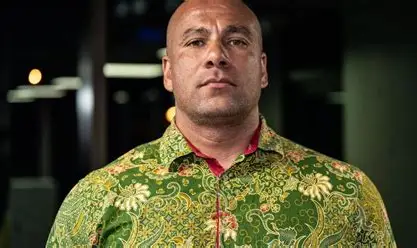
Stuart Scharnick was not a household name a year ago. Today he is one of the most searched figures connected to South Africa’s Madlanga Commission, after being arrested on 20 August 2026 over claims he intimidated a journalist covering the inquiry. Here is what has actually been confirmed about him, and what still hasn’t.
Background
Stuart James Scharnick is a Durban-based businessman who became publicly known in late 2025, when his name came up during testimony at the Madlanga Commission of Inquiry. That commission is investigating allegations of corruption, cartel infiltration, and interference inside the South African Police Service. Scharnick was named by SAPS Crime Intelligence head Lieutenant General Dumisani Khumalo as an associate, and reportedly a personal protector, of suspended Deputy National Police Commissioner Lieutenant General Shadrack Sibiya. Khumalo told the commission that a Toyota Hilux bakkie Sibiya was often seen driving was actually registered in Scharnick’s name.
Scharnick denies being anyone’s bodyguard. He describes himself as an acquaintance of Sibiya rather than an employee or protector, and he has publicly and repeatedly pushed back on the picture painted of him at the commission. He also appeared seated behind Sibiya during Sibiya’s October 2025 appearance before a parliamentary ad hoc committee, which is part of why his name kept resurfacing in coverage of the inquiry.
People are searching for him because his story sits at the intersection of two things that generate huge public interest right now: a live corruption inquiry involving top police officials, and a personal drama involving criminal allegations, a defamation fight, and now an arrest. Each new development in the Madlanga Commission tends to push his name back up in search trends.
The Madlanga Commission itself was set up to look into serious claims that criminal syndicates, sometimes described in testimony as a “Big Five cartel,” had infiltrated parts of South African law enforcement, allegedly influencing which cases got investigated, delayed, or dropped. Scharnick is not accused of running that syndicate. His relevance to the inquiry comes from his personal closeness to Sibiya, a senior officer suspended over separate allegations, and from questions about how someone with a lengthy criminal case history ended up regularly present around senior police leadership and, at one point, appearing alongside Sibiya at a parliamentary hearing.
Latest Update
Scharnick was arrested on Thursday, 20 August 2026, after Sowetan journalist Herman Moloi laid a criminal charge of intimidation against him. According to Moloi’s account, the incident happened at the Brigitte Mabandla Justice College, where the Madlanga Commission has been sitting. Moloi had photographed or filmed Scharnick with suspended Member of Parliament Fadiel Adams, and Scharnick allegedly confronted him afterward, telling him to stop filming and accusing him of posting videos of him online. Video of the confrontation, and of Scharnick being taken away by police, circulated widely on South African social media within hours.
⚠️ Important distinction: The intimidation charge is an allegation, not a conviction. As of publication, no court finding has been confirmed.
The Political Killings Task Team was reportedly involved in the arrest. SAPS national spokesperson Brigadier Athlenda Mathe said a formal statement would follow once more information was available, and a Madlanga Commission spokesperson said the commission was concerned about the incident. Sowetan publicly condemned the alleged intimidation, framing it as a broader threat to press freedom around the commission’s proceedings.
This arrest follows months of escalating back-and-forth. In November 2025, KwaZulu-Natal police held a media briefing stating that Scharnick had been linked to 29 criminal case dockets, mostly involving vehicle theft and hijacking, with 18 of those consolidated into a single case that ended in a plea agreement: a five-year prison sentence, wholly suspended, plus a fine of R150,000 payable over five years. Police also said they were investigating a SAPS employee suspected of accessing internal systems to alter or clear parts of Scharnick’s criminal record. Separately, the National Prosecuting Authority said it was reviewing how that plea deal was reached in the first place.
Scharnick, for his part, has disputed the “serial hijacker” characterization and specifically denies ever being convicted of hijacking. In November 2025 he opened his own cases against Khumalo, including fraud, defamation, and defeating the ends of justice, arguing that Khumalo’s commission testimony wrongly linked him to hijacking syndicates and cartels and caused, in Scharnick’s words, irreparable damage to himself, his family, and his business. As of this writing, no verified update on the outcome of either the plea-deal review or Scharnick’s defamation case against Khumalo has been confirmed. Those matters remain open.
There is also a firearms detail that has surfaced in reporting: police briefings have noted that Scharnick is a licensed owner of five firearms, including rifles, a handgun, and a shotgun, despite his documented criminal case history. This detail has been cited by critics questioning how his firearm licenses were approved or retained, though no verified source has reported any legal action specifically tied to the licenses themselves.
| Date | Development |
|---|---|
| October 2025 | Scharnick appears seated behind Sibiya at a parliamentary ad hoc committee hearing |
| 4–5 November 2025 | Khumalo names Scharnick at the Madlanga Commission, calls him Sibiya’s protector and links him to hijacking cases |
| 12 November 2025 | Scharnick opens fraud, defamation, and perjury cases against Khumalo |
| 13–14 November 2025 | KZN police brief media: 29 case dockets, 18 convictions consolidated into one plea deal; NPA reviews the deal; SAPS insider probed over altered records |
| 20 August 2026 | Scharnick arrested after a journalist opens an intimidation case against him at the Madlanga Commission venue |
Full Profile
Family and Early Life Unconfirmed
Not publicly confirmed. Scharnick has referred to “my family” being affected by the controversy but has not named family members publicly, and no verified source details his upbringing.
Career Path
Scharnick is described in South African media as a Durban businessman, though the nature of his business has not been detailed in verified reporting. His public profile grew almost entirely through his association with Sibiya and his appearances connected to the Madlanga Commission, not through a disclosed business career.
Age Unconfirmed
No verified source publishes his date of birth or current age.
Religion Unconfirmed
No verified source addresses this.
Spouse/Partner Unconfirmed
No verified reporting names a spouse or partner.
Net Worth Unconfirmed
No credible financial disclosure or verified estimate exists.
Parents Unconfirmed
No verified source names his parents.
Height Unconfirmed
Not addressed in any verified source.
Education Unconfirmed
No verified reporting details his schooling.
Hometown/State of Origin
Reported as based in Durban, KwaZulu-Natal, South Africa, based on multiple news reports describing him as a “Durban businessman.”
Official Social Media Unconfirmed
No verified official account has been confirmed. Content referencing him has appeared on Instagram and Facebook, but ownership and authenticity of those specific accounts have not been independently verified, so no link is provided here as confirmed official.
💡 Why so many “Unconfirmed” tags? Scharnick became newsworthy suddenly, through a corruption inquiry, not through a long public career with a Wikipedia page or press kit. That means the standard biography details simply don’t have verified sources yet.
Reader Questions
Who is Stuart Scharnick?
He is a Durban businessman who became widely known after being named at South Africa’s Madlanga Commission of Inquiry as an associate of suspended police official Shadrack Sibiya. He has since become a recurring figure in coverage of alleged police corruption and cartel links.
Is Stuart Scharnick Shadrack Sibiya’s bodyguard?
Crime Intelligence boss Dumisani Khumalo described him that way in commission testimony. Scharnick disputes this and says he is simply an acquaintance, not an employed protector.
Was Stuart Scharnick convicted of hijacking?
Police say he was linked to 29 to 34 case dockets involving vehicle theft and hijacking, with reports of 18 resulting in a consolidated plea deal. Scharnick disputes the characterization and specifically denies ever being convicted of hijacking itself.
Why was Stuart Scharnick arrested in August 2026?
He was arrested on 20 August 2026 after a Sowetan journalist opened an intimidation case against him, alleging Scharnick confronted and threatened him for filming at the Madlanga Commission.
Has Stuart Scharnick been convicted or sentenced?
Reports describe a five-year prison sentence, wholly suspended, and a R150,000 fine tied to a consolidated 2025 plea agreement covering multiple case dockets. The NPA has said it is reviewing how that deal was reached, so its final standing remains an open question.
Is Stuart Scharnick’s arrest connected to the Madlanga Commission?
Yes. The alleged intimidation happened at the venue where the commission was sitting, involving a journalist covering the proceedings, and comes after months of Scharnick’s name surfacing repeatedly in commission-related testimony.
What is Stuart Scharnick’s net worth?
Unconfirmed. No verified source has published a credible net worth figure for him.
Wrap-Up
Stuart Scharnick’s story is really two stories tangled together. One is about a national corruption inquiry trying to work out how deep cartel influence runs inside South African policing. The other is a much more personal fight over reputation, criminal history, and now, an accusation of intimidating a journalist. Both are still unfolding, and neither has reached a settled conclusion.
What can be said with confidence is limited: he has been publicly linked to Sibiya, he has a documented history of criminal case dockets that resulted in a suspended sentence and fine, he has filed his own legal complaints disputing how he was portrayed, and he was arrested on 20 August 2026 over an alleged confrontation with a journalist. Claims about the exact number of convictions, the full nature of his relationship with Sibiya, and outcomes of the ongoing legal disputes remain contested or unresolved.
Given how active this story still is, expect more developments as the Madlanga Commission continues its work and as the courts, the NPA, and now police handle the fresh intimidation case. Anyone following this should treat single-source claims from any side, including Scharnick’s own statements, with the same caution as the allegations made against him, until independently confirmed.
It’s also worth remembering how thin the publicly verified record still is outside of the criminal and commission-related reporting. There is no Wikipedia entry for him despite the keyword search suggesting one exists, no confirmed birthdate, no named family members, and no verified financial figures. That gap is normal for someone who became newsworthy suddenly through a corruption inquiry rather than through a long public career, but it means readers should be skeptical of any biography-style page claiming to know these personal details with confidence. Until South African courts, the NPA, or the commission itself issue further findings, the honest answer to most personal questions about Scharnick is simply that they remain unconfirmed.

Smith Andrew is the Founder and Editor of BiographyCabal. He researches, writes, and edits accurate, engaging, and well-researched biographies of celebrities, entrepreneurs, athletes, influencers, politicians, and other notable public figures. Committed to factual reporting and quality storytelling, Smith ensures every article is reader-focused, informative, and based on reliable sources, helping readers discover the lives, careers, and achievements of influential people around the world.