

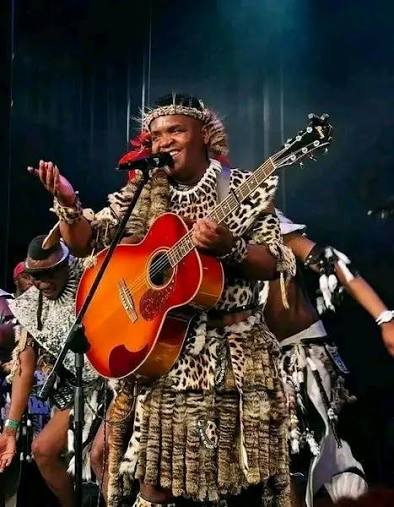
Scebi Dlamini, the Maskandi singer known to fans across South Africa as Inkosi Yamagcokama, has died in a car crash in Richards Bay. This article explains who he was, how he built his music career, and what is actually confirmed about his passing as news continues to develop. Search interest in his name has spiked today because of this breaking news, so this piece separates confirmed facts from unverified claims.
Background
Scebi Dlamini was a South African musician who performed under the stage name Inkosi Yamagcokama, sometimes written as Inkos’yamagcokama. He worked in Maskandi, a guitar-driven style of Zulu folk music that tells stories about everyday life, love, and community. Maskandi has deep roots in KwaZulu-Natal, and Dlamini was one of the artists who helped keep that sound popular with newer generations of listeners.
He came from Msinga, a rural area in the KwaZulu-Natal midlands known for producing several respected Maskandi performers. Fans searching for him today are mostly trying to find out what happened in the accident that ended his life, since the news broke only hours ago and details are still being confirmed by officials.
Maskandi music is often described as a musical diary of the Zulu people. Artists in this genre write about family, hardship, love, and pride in their home communities, usually over fast, intricate acoustic guitar picking rather than heavy production. Dlamini fit squarely into that tradition, and his songs felt personal and close to everyday life rather than distant celebrity storytelling. That connection with ordinary listeners is a big part of why his name is trending across South African search engines right now.
Latest Update
As of AUGUST 09, 2026, here is what’s currently known. Scebi Dlamini died in a car accident in Richards Bay, KwaZulu-Natal, in the early hours of Sunday morning. The crash happened at a traffic light opposite Melomed Hospital, along a stretch connected to the N2 highway. He was reportedly on his way to perform at the Basadi Let’s Dance Music Festival at the Umhlathuze Sports Complex when the collision occurred.
Key Date: August 9, 2026 — KwaZulu-Natal MEC for Transport and Human Settlements, Siboniso Duma, confirmed that Dlamini died at the scene of the crash.
According to Duma’s statement, Dlamini was travelling with members of his stage crew. One occupant of the vehicle, who was rushed to hospital, later died from injuries as well. Dlamini’s family and management named this second person as Gumu “Gupta” Mchunu, a member of the stage crew, though this detail has only appeared in a small number of reports so far and should be treated as provisional. Two other people in the car were hospitalized, with one described as critical but stable. The exact cause of the crash has not been released, and the South African Police Service accident investigation unit is handling the inquiry.
What is not yet confirmed: The official cause of the crash, the full identity of the second person who died, and the long-term condition of the surviving passengers are all still under investigation. Treat any specific claims about the cause as unverified until police or the family release an official statement.
Tributes have poured in from South Africa’s music community, government officials, and fans on social media since the news broke. No further updates beyond what is listed above have been independently verified as of this writing.
Full Profile
Family and Early Life
Dlamini was raised in Msinga, KwaZulu-Natal, an area with a strong Maskandi tradition. Details about his childhood and how he first picked up the guitar have not been widely published in verifiable sources, so specifics beyond his hometown and family background remain limited in public reporting.
Career Path
Dlamini built his name in Maskandi music, a genre defined by intricate guitar picking and storytelling lyrics sung in isiZulu. He released music under the name Inkos’yamagcokama, with songs including “Kungcono Ngife” (2017) and “Asenzele Bona” (2019) helping establish his following. Other tracks associated with his catalogue include “Akabuye” and “Ifoni.” His music focused on real-life themes, love, and tributes to Zulu culture and the people of KwaZulu-Natal, which is part of why he built such a loyal fan base in the province and beyond.
What set Dlamini apart from many newer Maskandi acts was his vocal style. Music profiles describe his delivery as soft and high-pitched, layered over rhythmic, fast-moving guitar patterns rather than the deeper, heavier tone some other Maskandi artists use. That combination gave his songs a distinct sound on radio and streaming platforms, and it helped him stand out in a genre packed with talent from across KwaZulu-Natal. By the time of his death, he had spent close to a decade building this catalogue and touring festival stages, including the very event he was travelling to when the crash happened.
Age
Dlamini’s exact date of birth is not confirmed in publicly available records at this time. This is common for regional Maskandi artists, whose biographical details often stay out of mainstream media until a major news event, like his passing, puts a spotlight on their profile. This article will not guess an age; it will be updated if a verified birth date becomes available.
Religion
No verified information about Dlamini’s religious beliefs or affiliation is currently available in public sources. Family tribute statements have referenced general condolences and prayers, which is common in South African public mourning, but this does not confirm a specific faith or denomination.
Spouse/Partner
Some social media posts reference a wife and family life, but no verified, on-the-record confirmation of a spouse’s identity has been published by credible news outlets. This detail is treated as unconfirmed until an official source names his partner.
Net Worth
There is no verified, publicly documented figure for Dlamini’s net worth. Any number circulating online should be treated as an estimate at best, not a confirmed fact.
Parents
Dlamini’s father, Methokayise Dlamini, died in May 2023 at the age of 58, passing away suddenly in his sleep at the family home in Msinga. His mother, Thuthelaphi Ngubane, died in 2021 in a similar sudden manner. Dlamini spoke publicly at the time about how painful it was that both parents died in the same way, just two years apart.
Height
No verified height figure for Dlamini has been published in reliable sources.
Education
Details of Dlamini’s schooling have not been confirmed through verifiable public records.
Hometown/State of Origin
Dlamini was from Msinga, a rural municipality in the KwaZulu-Natal midlands, South Africa. Msinga is known as a home base for several well-known Maskandi artists and has a strong cultural association with the genre.
Official Social Media
Dlamini’s official Facebook page can be found here: Scebi Dlamini on Facebook.
| Category | Detail |
|---|---|
| Real Name | Scebi Dlamini (also written Sicebi Dlamini) |
| Stage Name | Inkosi Yamagcokama / Inkos’yamagcokama |
| Genre | Maskandi (Zulu folk music) |
| Hometown | Msinga, KwaZulu-Natal, South Africa |
| Notable Songs | “Kungcono Ngife” (2017), “Asenzele Bona” (2019), “Akabuye,” “Ifoni” |
| Father | Methokayise Dlamini (died May 2023) |
| Mother | Thuthelaphi Ngubane (died 2021) |
| Date of Death | August 9, 2026 (Richards Bay, KwaZulu-Natal) |
Reader Questions (FAQ)
Who was Scebi Dlamini?
Scebi Dlamini was a South African Maskandi musician known by the stage name Inkosi Yamagcokama. He was from Msinga, KwaZulu-Natal, and built a following through storytelling songs rooted in Zulu culture.
Did Scebi Dlamini really die?
Yes. His death was confirmed by KwaZulu-Natal’s MEC for Transport and Human Settlements, Siboniso Duma, following a car crash in Richards Bay on the morning of August 9, 2026. Multiple South African news outlets have reported the confirmation.
How did Scebi Dlamini die?
He died at the scene of a car crash at a traffic light opposite Melomed Hospital in Richards Bay while travelling to a music festival. The exact cause of the crash has not yet been made public and remains under police investigation.
Where was Scebi Dlamini from?
He was from Msinga, a rural area in the KwaZulu-Natal midlands of South Africa, a region known for its strong Maskandi music tradition.
What music did Scebi Dlamini make?
He performed Maskandi, a guitar-based Zulu folk genre, releasing songs such as “Kungcono Ngife” in 2017 and “Asenzele Bona” in 2019. His lyrics often focused on everyday life and Zulu cultural pride.
Did Scebi Dlamini have children?
Some sources reference him having a young daughter and son, but this has not been fully confirmed through official, on-the-record statements, so it should be treated as unverified for now.
Were other people hurt in the crash that killed Scebi Dlamini?
Yes. Officials confirmed that one other occupant of the vehicle also died after being taken to hospital, while two more people from the car were hospitalized, with one reported to be in critical but stable condition.
What is Maskandi music?
Maskandi is a traditional Zulu folk music style built around fast, detailed acoustic guitar playing and storytelling lyrics. It is closely tied to KwaZulu-Natal culture, and artists in the genre, including Dlamini, often sing about family, love, hardship, and pride in their home communities.
Wrap-Up
Scebi Dlamini’s death has hit South Africa’s Maskandi community hard, coming from an artist who had spent years building a name for himself through music rooted in his home community of Msinga. His songs carried the kind of storytelling that made Maskandi popular well beyond KwaZulu-Natal, and his passing has brought an outpouring of tributes from fans, fellow musicians, and government officials alike.
Much of what is publicly known about Dlamini centers on his music and, now, on the tragic accident that ended his life. Basic personal details like his exact age, education, and family life beyond his parents remain thin in verified public records, which is common for artists whose fame is tied more closely to their music than to public biography pages.
It is also worth remembering that his death arrives less than four years after Dlamini lost both of his parents in similarly sudden circumstances, first his mother in 2021 and then his father in 2023. For a musician whose songs so often reflected on real hardship and loss, that pattern has added an extra layer of grief for fans who followed his story closely over the years. As official statements and family confirmations continue to come in, the full picture of his life and career is likely to become clearer.

Smith Andrew is the Founder and Editor of BiographyCabal. He researches, writes, and edits accurate, engaging, and well-researched biographies of celebrities, entrepreneurs, athletes, influencers, politicians, and other notable public figures. Committed to factual reporting and quality storytelling, Smith ensures every article is reader-focused, informative, and based on reliable sources, helping readers discover the lives, careers, and achievements of influential people around the world.