

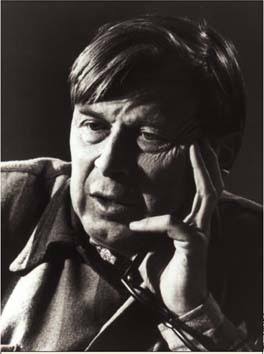
D. Carleton Gajdusek won a Nobel Prize for solving one of medicine’s strangest mysteries, then spent his final years known just as much for a criminal conviction. People search his name today because his story sits at the odd crossing point of scientific brilliance and serious wrongdoing. Here is what is actually documented about his life, verified against credible sources.
Background: Who Was D. Carleton Gajdusek?
Daniel Carleton Gajdusek was an American physician and medical researcher born on September 9, 1923, in Yonkers, New York. He trained as a pediatrician but became famous for something far outside a normal hospital career: figuring out how a fatal brain disease called kuru spread among the Fore people of Papua New Guinea.
He shared the 1976 Nobel Prize in Physiology or Medicine with Baruch S. Blumberg for showing that infectious diseases could spread through mechanisms nobody had properly mapped out before. Gajdusek lived among the Fore people, studied their language and culture, and performed autopsies on kuru victims, eventually concluding that the disease spread through a funeral custom involving eating the brains of the deceased. That discovery reshaped how scientists understood a whole category of brain diseases, including what we now call prion disorders.
People still search for him today for two very different reasons. Science students and prion-disease researchers look him up because his kuru work remains a foundational case study in infectious disease history. Everyone else tends to search his name after hearing about the criminal case that ended his career, which is why any honest profile of him has to cover both sides plainly.
Latest Update
D. Carleton Gajdusek died in 2008, so there is no active breaking news attached to him personally. No new development involving him has been verified as of this date. The steady search interest in his name comes from a few ongoing sources: continued academic references to his kuru and prion research, periodic documentary and podcast coverage of his criminal case, and general encyclopedia-style lookups from people encountering his name in science coursework or true-crime discussions.
⚠️ A note on rumors: Because his story involves a serious crime, exaggerated or unverified claims about him circulate online, including inflated and unsubstantiated numbers of alleged victims. This article only includes details confirmed by established sources such as Wikipedia, Encyclopaedia Britannica, the National Institutes of Health, and mainstream news coverage from the time of his conviction.
Full Profile
Family and Early Life
His father, Karl Gajdusek, was a Slovak immigrant farm boy who came to America alone before World War I and became a butcher in Yonkers, where he met and married Ottilia Dobroczki, whose parents had also immigrated alone from Hungary. Gajdusek grew up in that household in Yonkers, New York, with an aunt who worked as an entomologist reportedly sparking his early interest in science.
Career Path
Gajdusek earned his M.D. from Harvard University in 1946 and completed a pediatrics and infectious disease fellowship at Harvard from 1949 to 1952. He then worked in virus research for the U.S. Army and spent time at research institutes in Iran, Afghanistan, and Turkey before joining the Walter and Eliza Hall Institute of Medical Research in Melbourne, Australia, in 1955, where his kuru research began. He later spent decades running a laboratory at the National Institutes of Health, studying disease patterns in isolated populations around the world.
Age
Gajdusek was born September 9, 1923, and died December 12, 2008, at age 85. He is not a living public figure, so there is no current age to report.
Religion
No credible source documents Gajdusek’s religious affiliation or personal beliefs. This detail is unconfirmed and should not be assumed one way or another.
Spouse/Partner
Available records do not show Gajdusek as ever having married or having a documented spouse or romantic partner. He is consistently described in biographical sources as unmarried throughout his life.
Net Worth
No verified figure for Gajdusek’s net worth exists in any financial record, estate filing, or reputable publication reviewed for this article. Any specific dollar amount circulating online should be treated as unconfirmed.
Parents
His father was Karl Gajdusek, a butcher who emigrated from a village near Senica, in what is now Slovakia. His mother was Ottilia Dobroczki, whose parents emigrated from Debrecen, Hungary. Both parents settled in Yonkers, New York, where Gajdusek was raised.
Height
No reliable source publishes Gajdusek’s height. This detail is unconfirmed.
Education
Gajdusek graduated summa cum laude from the University of Rochester in 1943 with a degree in biophysics, then received his M.D. from Harvard Medical School in 1946, followed by a postdoctoral fellowship in physical chemistry at Caltech under Linus Pauling.
Hometown / State of Origin
Gajdusek was born and raised in Yonkers, New York, a city just north of New York City in Westchester County.
Official Reference Link
Gajdusek died in 2008, before most social media platforms existed, so he has no official social media account. The closest thing to an official profile is his Nobel Prize biography page, maintained by the Nobel Foundation: nobelprize.org/prizes/medicine/1976/gajdusek.
| Category | Detail |
|---|---|
| Full Name | Daniel Carleton Gajdusek |
| Born | September 9, 1923 — Yonkers, New York, U.S. |
| Died | December 12, 2008 (age 85) — Tromsø, Norway |
| Nobel Prize | Physiology or Medicine, 1976 (shared with Baruch S. Blumberg) |
| Known For | Discovering how kuru disease spreads; foundational prion disease research |
| Education | University of Rochester (BS), Harvard Medical School (MD), Caltech (postdoctoral) |
| Criminal Case | Pleaded guilty to child molestation in 1997; served 12 months in prison |
Reader Questions (FAQ)
What is D. Carleton Gajdusek famous for?
He is famous for discovering that kuru, a fatal brain disease among the Fore people of Papua New Guinea, spread through a funeral practice involving handling and eating the brains of the deceased. This work earned him a share of the 1976 Nobel Prize in Physiology or Medicine and helped launch the modern study of prion diseases.
Did D. Carleton Gajdusek go to prison?
Yes. In 1997, Gajdusek pleaded guilty to child molestation involving a minor and spent about 12 months in a U.S. prison. After his release, he moved to Europe, where he lived until his death in 2008.
Is D. Carleton Gajdusek still alive?
No. He died on December 12, 2008, in Tromsø, Norway, at age 85. He was not actively working as a research scientist in the U.S. at the time, having relocated to Europe after his release from prison.
What disease did D. Carleton Gajdusek study?
He primarily studied kuru, a neurodegenerative disease that causes trembling, loss of coordination, and eventually death. His research also contributed to understanding related conditions like Creutzfeldt-Jakob disease, part of the broader family now known as prion diseases.
Did D. Carleton Gajdusek have children?
He never married and had no biological children on record. Over his lifetime he informally brought dozens of children from Papua New Guinea and Micronesia to live with him in the United States, referring to them as his adopted family, though this arrangement later became central to the criminal case against him.
Why did D. Carleton Gajdusek win the Nobel Prize?
He won the 1976 Nobel Prize in Physiology or Medicine jointly with Baruch S. Blumberg “for their discoveries concerning new mechanisms for the origin and dissemination of infectious diseases.” His specific contribution was proving that kuru was an infectious, transmissible disease rather than a genetic or purely environmental one.
Wrap-Up
D. Carleton Gajdusek’s career is a genuinely difficult one to summarize in a single sentence, and that’s exactly why his name keeps coming up in searches decades after his death. On one hand, his fieldwork on kuru changed how doctors understand an entire category of brain disease, and that scientific contribution is well documented and still cited. On the other hand, his criminal conviction for child molestation is just as well documented, confirmed by his own guilty plea and reported by major outlets and institutions including the NIH itself.
Readers looking him up on Wikipedia today are usually trying to reconcile those two facts, and there isn’t a tidy way to do that. The honest approach is to report both parts of the record accurately rather than emphasizing one to soften or erase the other. Any claim beyond what’s verified here, including specific figures about victims that circulate on fringe websites, should be treated with skepticism unless a credible, named source backs it up.
As of today, nothing new has surfaced about Gajdusek, and his story remains historical rather than developing. If that changes, it would most likely come from newly released archival material, given that his personal papers remain partially restricted at the National Library of Medicine.

Smith Andrew is the Founder and Editor of BiographyCabal. He researches, writes, and edits accurate, engaging, and well-researched biographies of celebrities, entrepreneurs, athletes, influencers, politicians, and other notable public figures. Committed to factual reporting and quality storytelling, Smith ensures every article is reader-focused, informative, and based on reliable sources, helping readers discover the lives, careers, and achievements of influential people around the world.