

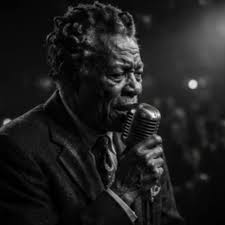
If you searched “Benny Rivers Wikipedia,” you probably expected to find a page about a soulful blues singer. You won’t find one — and there’s a specific reason for that. This article explains exactly who, or what, Benny Rivers is, why his music went viral in 2026, and why treating him like a real musician is a mistake.
Background: Who Is Benny Rivers?
Benny Rivers is the name attached to a set of songs and an album, Where the Hurt Lives, that surfaced online in the spring of 2026. The music was styled after mid-20th-century blues and Southern soul, with a gravelly voice, clean guitar lines, and horn flourishes that echoed singers like Ray Charles, Sam Cooke, and Muddy Waters.
People searching for a Wikipedia page usually do so because a name is trending and they want a trustworthy source. In this case, the trend itself is the story: listeners believed they’d discovered a new artist, a weathered-looking man in his sixties with decades of lived experience behind his lyrics. That man does not exist. The photo, the singing voice, and even a video of him performing were generated by artificial intelligence, not filmed with a real person.
What made this different from an ordinary novelty act is how the persona was built. It wasn’t just a stage name attached to a real singer using a pseudonym. Every visible piece of “Benny Rivers” — the aged face on the album cover, the description of him as a sixtysomething Black American singer with stories to tell, and a video that appeared to show him singing “What Pain Has Taught Me” — was manufactured. Nobody sat for that photo. Nobody performed that video. That’s the core fact that separates this from a typical celebrity biography.
🎧 The songs are real audio files you can stream. The “singer” behind them is not a real human being.
Latest Update
As of AUGUST 13, 2026, here is what’s currently known: no new development has been verified since music critic Graham Reid publicly confirmed in June 2026 that Benny Rivers, his photo, and a Facebook performance video were AI creations, not a real recording artist. There is no confirmed report of a record label, an AI company, or an individual publicly claiming authorship of the project. That detail remains unconfirmed, and this article will not guess at it.
What has stayed consistent is the reaction. The single “Step by Step in Time” reportedly passed three million streams on Spotify, and the album charted on Billboard’s blues listings and briefly appeared on the UK Official Charts before backlash grew. Commenters on official chart sites have pushed back openly, with some calling for fully AI-generated music to be barred from chart eligibility altogether.
📅 Key Date: June 2026 — Independent music critic Graham Reid published the first widely cited piece confirming Benny Rivers was an AI-generated persona, not a real singer.
It’s also worth explaining why this keeps surfacing in searches months later. Streaming platforms don’t typically remove AI-generated music just because its origin has been exposed, so the tracks and artist page have stayed live and searchable. New listeners keep discovering the songs without the context that earlier audiences eventually got from critics and chart-site commenters, which is why fresh waves of “Benny Rivers Wikipedia” searches keep appearing well after the initial story broke.
Full Profile
Because Benny Rivers is a fictional, AI-generated persona rather than a documented human being, most standard biography categories simply don’t apply to him. Rather than invent details to fill them in, each section below states plainly what is and isn’t known.
Family and Early Life
There is no early life to report. Benny Rivers has no birthplace, childhood, or upbringing on record, because he was never born — he was generated using AI tools designed to produce a voice, image, and backstory that sound plausible.
Career Path
The one part of this profile with real, checkable activity is the “career.” Tracks credited to Benny Rivers were uploaded to streaming platforms including Spotify, Apple Music, and Shazam starting around April 2026, distributed through a standard digital distributor. The music picked up genuine listener numbers even after the AI origin became public knowledge, which is part of why the story kept spreading.
Age
Unconfirmed and not applicable. The cover art shows a man who appears to be in his sixties, but that image was AI-generated, so it doesn’t correspond to any real person’s actual age.
Religion
No religion is documented, and none can be, since there is no real individual behind the name.
Spouse/Partner
Unconfirmed. No marriage, relationship, or partner has ever been reported for Benny Rivers, and none should be assumed given that he isn’t a real person.
Net Worth
There is no verifiable net worth tied to an individual named Benny Rivers. Streaming royalties generated by the songs likely go to whoever created and uploaded the project, but that person or company hasn’t been publicly identified in confirmed reporting.
Parents
Not applicable. No parents are documented because Benny Rivers was not born.
Height
Not applicable, for the same reason — there is no physical person to measure.
Education
No school, university, or training history has ever been attached to the Benny Rivers name in any verifiable source.
Hometown/State of Origin
Unconfirmed. Coverage of the project doesn’t tie Benny Rivers to any real city, state, or country of origin.
Official Social Media
Streaming profiles exist under the Benny Rivers name on Spotify and Apple Music, but no verified personal social media account (Instagram, X, or TikTok) run by a real individual has been confirmed as belonging to this project.
⚠️ Reader caution: Several low-quality blog posts online describe Benny Rivers as a real 20-something Nashville indie-folk singer with a specific birthdate and net worth. Those details contradict the confirmed AI-persona story and cannot be verified anywhere else. Treat them as unreliable.
Timeline of the Benny Rivers Story
| Date | Event |
|---|---|
| April 2026 | First songs credited to Benny Rivers, along with an AI-generated photo, appear online. |
| May 2026 | Debut album Where the Hurt Lives is released and charts on Billboard’s blues listings and briefly on the UK Official Charts. |
| June 2026 | Music critic Graham Reid publicly confirms the artist, photo, and performance video are AI creations. |
| August 2026 | No new confirmed developments; the project remains active on streaming platforms amid continued listener debate. |
Reader Questions (FAQ)
Is Benny Rivers a real person?
No. Benny Rivers is an AI-generated musical persona, not a real human singer. The photo and performance video associated with the name were created using artificial intelligence tools.
Does Benny Rivers have a Wikipedia page?
No verified Wikipedia page exists for Benny Rivers as of August 2026. Because he isn’t a real, documented individual, Wikipedia’s sourcing standards don’t currently support a biographical entry.
Who created the Benny Rivers AI project?
This is unconfirmed. No record label, developer, or individual has been publicly and reliably identified as the creator of the project in verified reporting.
What songs has Benny Rivers released?
The best-known tracks are “Step by Step in Time” and the album Where the Hurt Lives, which also includes songs like “What Pain Has Taught Me” and “Talking to Your Picture.”
Did Benny Rivers really chart on Billboard?
Yes, reporting indicates the single reached the top of Billboard’s Hot Digital Songs chart and the album appeared on Billboard’s blues albums chart in 2026, alongside a brief UK Official Chart appearance.
How can you tell if a music artist is AI-generated?
Warning signs include a limited or nonexistent public appearance history, an oddly perfect or slightly “off” promotional photo, no verifiable interviews, and biographical details that can’t be traced to any outside source. In Benny Rivers’ case, independent critics investigated and confirmed the AI origin directly.
Wrap-Up
The honest answer to “Benny Rivers Wikipedia” is that no page exists because there’s no real person to write one about. What looks like a music biography search is actually a story about how convincing AI-generated content has become — convincing enough that millions of real streams piled up before anyone raised the alarm.
That doesn’t mean the story is unimportant. It’s become a useful case study for how streaming platforms, chart organizations, and listeners are all still figuring out how to handle music, faces, and biographies that were never human to begin with. The pushback visible in chart comment sections shows real audiences are paying attention and asking hard questions about labeling and transparency.
If you came here looking for a trustworthy answer instead of an invented biography, that’s exactly what this article aimed to give you. As more AI-generated artists likely appear in the months ahead, the same approach applies every time: check whether a face, a voice, and a life story are actually documented before treating them as real.
It’s also a reminder to be careful about which sources you trust when a name suddenly starts trending. Not every article claiming to have “the facts” about a viral figure has actually verified them — some fill in gaps with guesses dressed up as biography, which is exactly how misinformation about a person, real or fictional, ends up spreading further than the truth. When the underlying subject is an AI creation, that risk is even higher, because there’s no real person to correct the record.

Smith Andrew is the Founder and Editor of BiographyCabal. He researches, writes, and edits accurate, engaging, and well-researched biographies of celebrities, entrepreneurs, athletes, influencers, politicians, and other notable public figures. Committed to factual reporting and quality storytelling, Smith ensures every article is reader-focused, informative, and based on reliable sources, helping readers discover the lives, careers, and achievements of influential people around the world.