

Lindsay Clancy, a former labor and delivery nurse from Duxbury, Massachusetts, is on trial for the deaths of her three young children in January 2023. As of this week, the trial is nearing its end — the defense has rested its case, prosecutors are calling rebuttal witnesses, and closing arguments are expected early next week. Here is what has actually been established in court, separated from speculation.
The basic facts of the case
On the evening of January 24, 2023, Clancy’s three children — 5-year-old Cora, 3-year-old Dawson, and 8-month-old Callan — died in the basement of the family’s home on Summer Street in Duxbury. Prosecutors say Clancy strangled the children with exercise resistance bands after sending her then-husband, Patrick Clancy, out on an errand. She has not disputed that she caused their deaths.
After the killings, Clancy attempted suicide, jumping from a second-story window. The fall left her paralyzed from roughly the chest down, and she has used a wheelchair throughout the legal proceedings, including during court appearances.
She was arraigned later that year on three counts of first-degree murder and related charges, and has pleaded not guilty. Because Clancy does not contest that she killed the children, the entire case has turned on a single legal question: was she criminally responsible for her actions at the time, or was she in the grip of a mental illness severe enough to meet Massachusetts’ legal standard for insanity?
The insanity defense, explained simply
In Massachusetts, a defendant can be found not guilty by reason of lack of criminal responsibility if a mental illness at the time of the act made it impossible for them to understand what they were doing was wrong, or to control their actions. It is a high legal bar, and proving it does not simply mean showing someone was distressed or unwell — it means showing their illness eliminated their capacity for judgment in that moment.
Clancy’s defense, led by attorney Kevin Reddington, has argued she was suffering from severe postpartum psychosis, compounded by heavy medication changes in the months before the killings. Over the trial, the defense called mental health professionals who testified she was in a serious psychiatric crisis at the time.
Prosecutors have pushed back hard on that framing. They’ve argued the killings were planned rather than a psychotic break — pointing, for example, to the fact that Clancy sent her husband out of the house beforehand. Prosecution rebuttal witnesses, including psychiatrists who evaluated Clancy after her arrest, have testified that she retained the ability to tell right from wrong and acted in an organized, deliberate way.
What Patrick Clancy has said
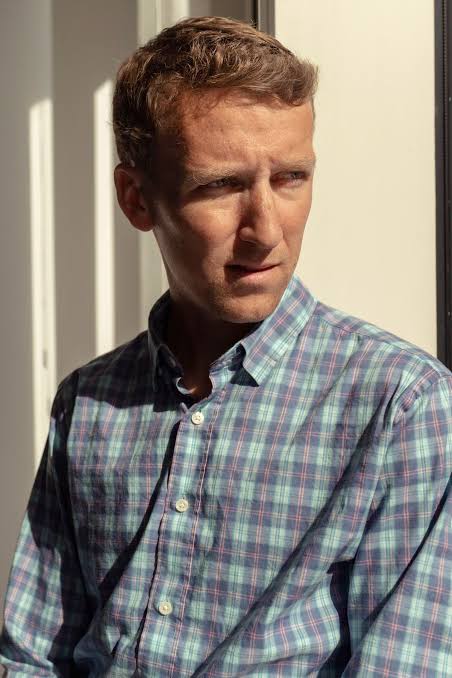
Patrick Clancy, the children’s father and Lindsay’s now ex-husband, was the prosecution’s first witness. Over two days on the stand, he described what he called a months-long decline in his wife’s mental health following the birth of their third child, including that she had talked about suicide. He also testified about returning home the night of the killings and finding his family. His account has been a central part of the trial’s public record, since he was both a firsthand witness to Clancy’s state of mind and the person who discovered the scene.
Court filings and reporting during the trial have also confirmed that Patrick Clancy and Lindsay Clancy are now divorced, and that he has since remarried. Details about his current family life beyond what’s been said in court filings are not something we’re treating as confirmed for this article, since they aren’t the subject of the trial and haven’t been independently verified through primary court records.
Where the case stands right now
As of August 22, 2026, no verdict has been reached. The defense rested on August 21, and prosecutors are in the middle of calling rebuttal witnesses — expert testimony aimed at undercutting the insanity defense. Judge William Sullivan has indicated closing arguments are likely to happen Monday or Tuesday of next week, after which the jury of 18 (which will be narrowed before deliberations, as is standard) will begin deliberating.
If convicted of murder, Clancy could face a sentence of life in prison. If the jury instead finds she lacked criminal responsibility due to mental illness, she would not be convicted of a crime — she would instead likely be committed to a secure psychiatric facility, a process the court would need to formally initiate.
No verdict, ruling, or sentencing date has been announced. Anything suggesting otherwise circulating online should be treated as unconfirmed until it’s reported by a credible outlet like the AP, Boston Globe, CNN, or local Massachusetts news stations that have covered the trial directly from the courtroom.
A note on how this story is being covered
This case has drawn national attention in part because it sits at the intersection of two things people often talk past each other about: the reality of severe postpartum mental illness, and the fact that three children died. Both are true at once, and the jury’s job is specifically to weigh whether the first explains the second under the law — not to decide which matters more. Coverage that flattens the case into either “clear-cut monster” or “clear-cut victim of illness” tends to skip over what’s actually being argued in the courtroom.
If you’re looking for updates, the most reliable sources are outlets that have had reporters present at the Plymouth County courthouse throughout — CNN, the Boston Globe, NBC10 Boston, Boston 25, and the AP have all provided ongoing coverage. Anything from unsourced social posts or blog aggregators repeating each other should be treated with caution until it’s confirmed by one of these outlets.
If this topic brings up difficult feelings — around parenting, mental health, or grief — it’s okay to step away from the coverage. The 988 Suicide & Crisis Lifeline is available by call or text in the US, and Postpartum Support International (1-800-944-4773) offers support specifically around perinatal mental health.

Smith Andrew is the Founder and Editor of BiographyCabal. He researches, writes, and edits accurate, engaging, and well-researched biographies of celebrities, entrepreneurs, athletes, influencers, politicians, and other notable public figures. Committed to factual reporting and quality storytelling, Smith ensures every article is reader-focused, informative, and based on reliable sources, helping readers discover the lives, careers, and achievements of influential people around the world.